What Concrete Leveling Costs, and Why (An Honest Breakdown)
Everyone wants a number, and we understand why. Nobody likes hearing "it depends." So here is the honest breakdown: what actually drives the price of a concrete leveling job, why a flat number on a website would not be doing you any favors, and how leveling stacks up against the alternative.
Why there is no single price
Concrete leveling is priced by the job, not by a sticker, because no two settled slabs are the same. A few things move the number more than anything else.
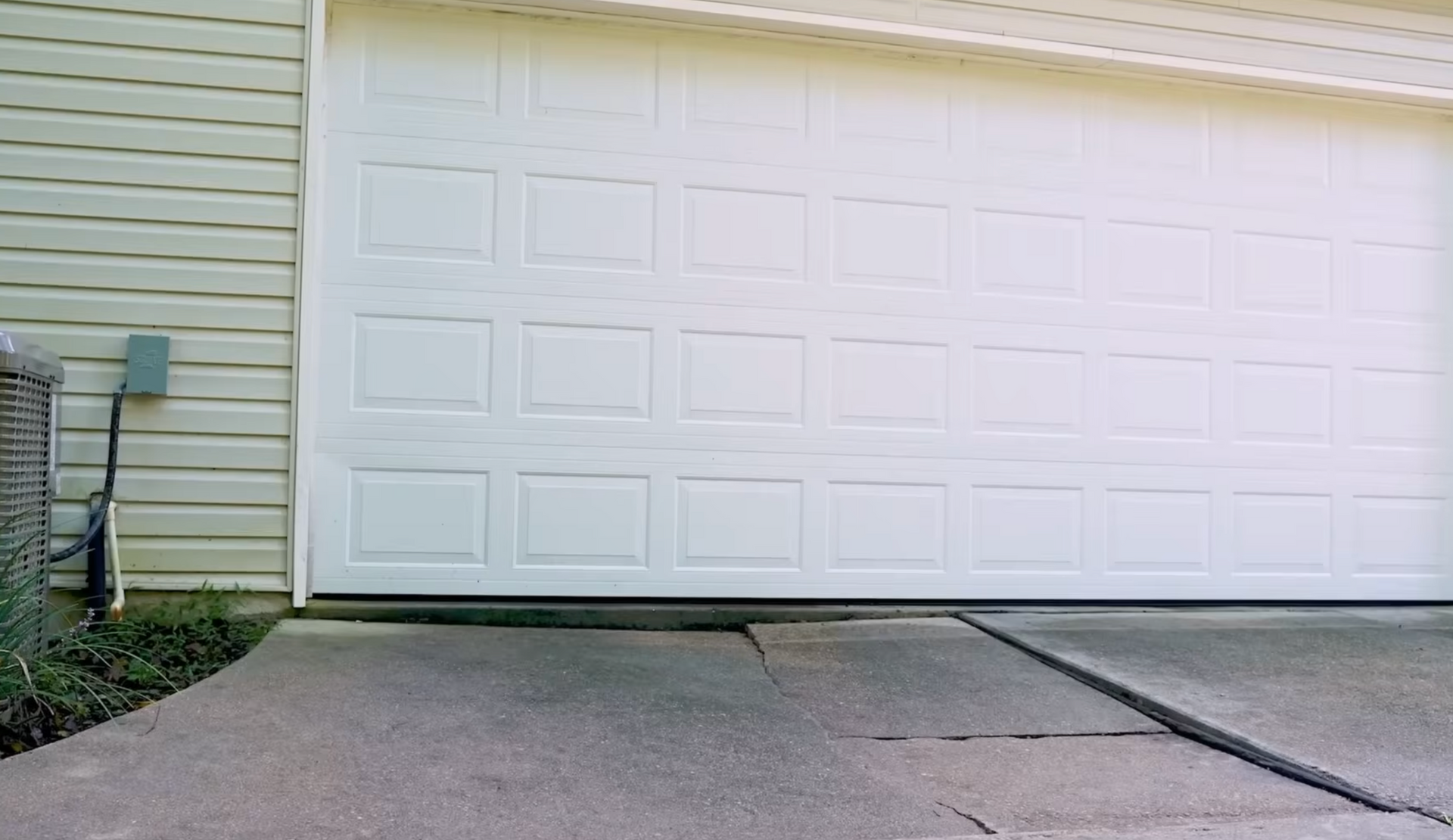
The size of the area is the obvious one. Raising a small section of sidewalk is a different job than lifting a whole driveway. The amount of lift matters too. A slab that has dropped half an inch needs less material than one that has sunk three inches, because there is more empty space to fill. The method plays a role, since polyurethane foam and cement slurry have different material costs. And access matters. A slab that is easy to reach is quicker to work than one tucked behind landscaping or a fence.
Put together, those factors are why a fair quote comes after someone looks at your specific slab, not before. Anyone who quotes a firm price sight unseen is either padding it to cover the unknowns or about to surprise you later.
The comparison that actually matters
The useful number is not the dollar figure on its own. It is leveling versus replacement, because replacement is the alternative you are weighing it against.
Replacing a slab means breaking up the old concrete, hauling it away, forming the area, pouring new concrete, and waiting several days for it to cure before you can use it. You are paying for demolition, disposal, new material, and labor spread across multiple days. Leveling skips almost all of that. You keep the concrete you have, you fill the void underneath, and you lift it back in a few hours. As a rule, leveling runs a fraction of what replacement costs, and you are back to using the surface far sooner.
There is a curb-appeal angle too. A leveled slab keeps its existing finish and matches the rest of your concrete, because it is the same concrete. A replacement is a fresh patch that rarely matches the weathered slab around it.
When leveling is not the cheaper answer
Honesty cuts both ways. If a slab is severely cracked, crumbling, or the concrete itself has failed, leveling is not the right spend, because you would be raising concrete that needs to be replaced anyway. A good contractor will tell you that instead of taking the easy job and leaving you to deal with the failing slab later. The goal is the repair that solves your problem for the lowest sensible cost, not the one that books the fastest.
How to get a real number for your slab
The path to an actual price is short and free. Someone looks at the slab, measures the area and the drop, checks the soil and drainage, and writes you a clear quote with the method and the cost spelled out. No charge for the look, no obligation to move forward, and no pressure to decide on the spot.
That is the only way to get a number you can trust, because it is the only way the number reflects your slab instead of an average. If you want a real figure for your driveway, patio, or floor, reach out for a free assessment and we will put it in writing.