Concrete Leveling & Slab Lifting in Fort Worth, TX
When a concrete slab settles, the first instinct is to assume the worst: that it is ruined and the only answer is to break it up and pour a new one. Most of the time, that is not true. The slab is fine. What failed is the dirt under it, and that is something we can correct without removing a single piece of your existing concrete. We raise the slab back to where it belongs, fill the empty space that let it sink, and leave you with a level, stable surface, usually in a few hours.
This is the page for settled slabs and floors: garage floors that slope toward the door, interior slabs that have dropped in one corner, shop and shed floors, and home foundation slabs that have settled in a section. If your concrete has sunk, cracked from the strain, or started to feel uneven underfoot, you are in the right place. Call today for a free quote.
How concrete leveling works
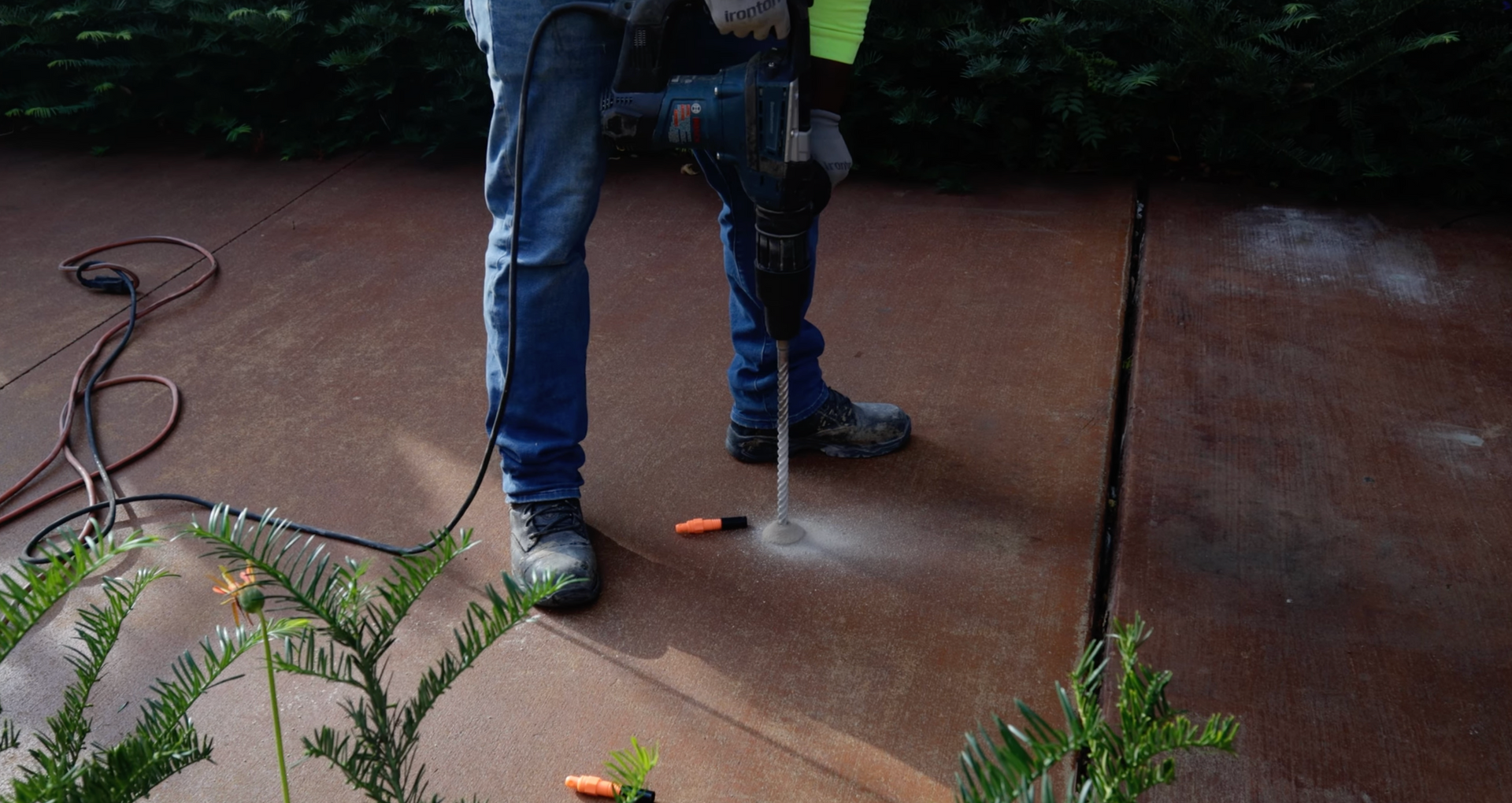
The method is simple to picture. Your slab dropped because gaps opened up in the soil underneath it and the concrete lost its support. To fix it, we fill those gaps and use the filling material to push the slab back up to grade in a slow, even lift. We do this through small holes, about the size of a coin, drilled into the slab. When the lift is done, we patch the holes and clean up. There is no demolition, no hauling, and no days of waiting for new concrete to cure.
There are two proven ways to do it, and the right one depends on your slab and your situation.
1. Foam Jacking (polyurethane)
We inject an expanding polyurethane foam under the slab. It spreads into the voids, firms up in minutes, and lifts the concrete with precise control. The foam is lightweight, so it does not add load to soil that is already moving, and it does not wash out. Holes are smaller and the surface is usually ready to use the same day. This is often the better fit for slabs over our local clay.

2. Mudjacking (cement slurry)
We pump a cement-based slurry under the slab to fill the space and raise it. It has been done for decades, it works well, and it can be a budget-friendly choice for heavier outdoor slabs like thick driveways. The trade-off is a heavier fill and slightly larger holes.
Which is right for you?
We will tell you honestly after we look. The deciding factors are the type of slab, how much it has dropped, what the soil is doing, and your budget. Both methods lift concrete. The goal is to match the method to the job, not to upsell you into the more expensive one.
Filling the voids is the part that lasts
Anybody can pump material under a slab and watch it rise. The repair that holds is the one that actually fills the empty space underneath, all of it, so the slab has continuous support again instead of resting on a few high points. That is where careful work matters. We fill the voids completely and lift in a controlled way so the slab comes up evenly rather than cracking under an uneven push.
We also talk with you about why the slab dropped in the first place. If a downspout is dumping water against the edge, or the grading sends rain toward the slab instead of away from it, the soil there will keep moving. Raising the concrete and ignoring the water is like drying the floor without turning off the leak. We would rather point out the cause so the repair you pay for actually stays put.
Imagine The garage floor you forgot to worry about
Picture pulling into the garage and not feeling that dip by the door. The crack that was spreading is not spreading anymore because the slab is fully supported again. The interior floor that made you nervous about the foundation is sitting level, and you have a clear answer about what was happening and what it took to fix. No tear-out, no new slab, no week of mess. Just the concrete you already had, back where it should be.
That is a normal afternoon for this kind of repair. The hard part is usually deciding to make the call, not the work itself.
If a slab, garage floor, or interior floor has settled, let us take a look before it drops further. The assessment and the quote are free, and there is no pressure either way. Call [TRACKING NUMBER] or send a few details and we will get right back to you.